

【英語】中1-29 代名詞②(練習編) - 質問解決D.B.(データベース)

【英語】中1-29 代名詞②(練習編)

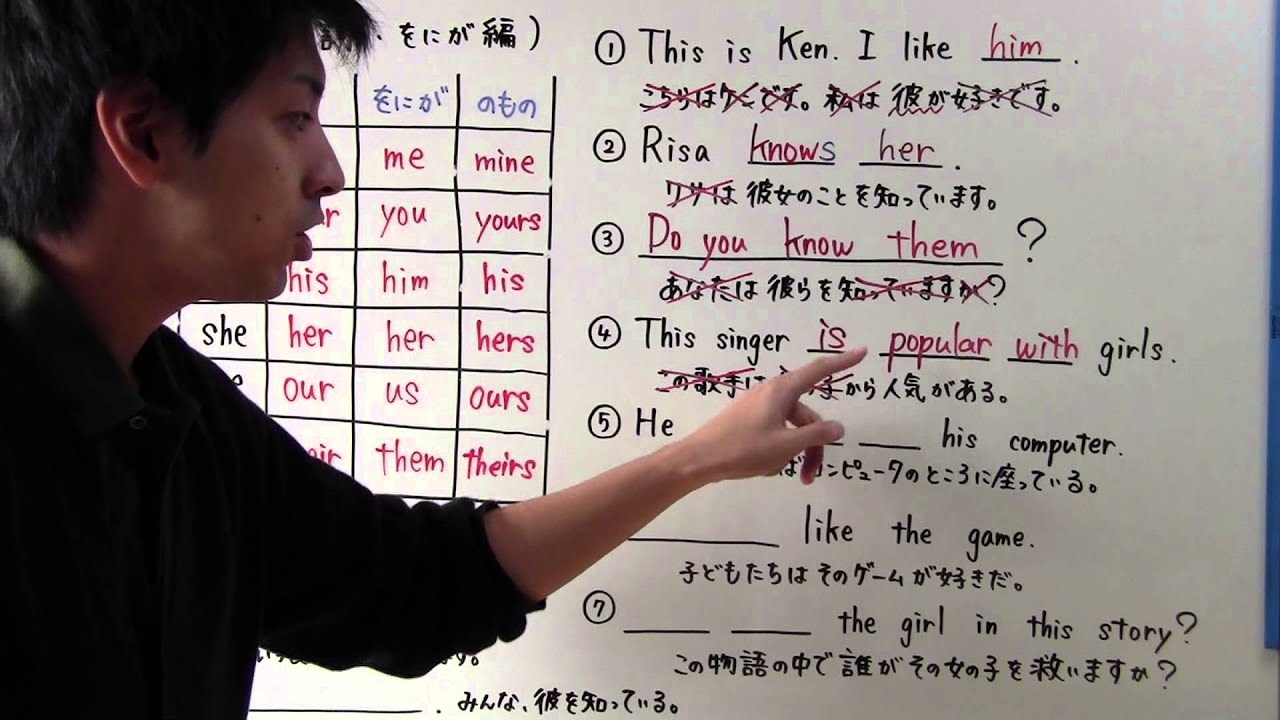
問題文全文(内容文):
①Taku ____ ____.
タクは彼女のことが好きです。

②____ ____ know ____.
私たちは彼を知りません。

③____ book is ____.
この本は彼女にものです。

④____ is ____ book.
あれは彼女の本です。

⑤Shiori ____ ____.
シオリは彼らのことが大好きです。

⑥____ he ____ ____ ?
彼は私たちのことを知っていますか?

⑦____ pens ____ ____.
これらのペンは私たちのものです。

⑧__ go to school __ ____.
私は彼と一緒に学校に行きます。
単元: #英語(中学生)#中1英語#名詞・代名詞の複数形、How many~?、someとany#代名詞の目的格、所有代名詞、Whose~?と答え方
指導講師: とある男が授業をしてみた
問題文全文(内容文):
①Taku ____ ____.
タクは彼女のことが好きです。

②____ ____ know ____.
私たちは彼を知りません。

③____ book is ____.
この本は彼女にものです。

④____ is ____ book.
あれは彼女の本です。

⑤Shiori ____ ____.
シオリは彼らのことが大好きです。

⑥____ he ____ ____ ?
彼は私たちのことを知っていますか?

⑦____ pens ____ ____.
これらのペンは私たちのものです。

⑧__ go to school __ ____.
私は彼と一緒に学校に行きます。
投稿日:2013.10.05
<関連動画>

【英語】中1-14 一般動詞③(疑問と否定編)

アイキャッチ画像
単元: #英語(中学生)#中1英語#一般動詞(1・2人称)(肯定文・否定文・疑問文)
指導講師: とある男が授業をしてみた
問題文全文(内容文):
一般動詞③(疑問と否定編)解説していきます。
この動画を見る 

Lesson9-3 NT Stage1 3rd Edition【YAKISOBA先生がていねいに解説】

アイキャッチ画像
単元: #英語(中学生)#中1英語#時刻の表し方とたずね方、曜日・日付のたずね方、When~?、「時」を表す前置詞
教材: #NT ENGLISH SERIES#Third Edition Stage1#Lesson9#中高教材
指導講師: 理数個別チャンネル
問題文全文(内容文):
N.T. ENGLISH SERIES Third Edition Stage1 Lesson9-3の解説です。
この動画を見る 

Lesson1-2 ニュートレジャー Stage1 3rd Edition【岡ちゃん先生がていねいに解説】

アイキャッチ画像
単元: #英語(中学生)#中1英語#中2英語#This is~. That is~. What is~? の文(肯定文・否定文・疑問文)#be動詞の過去形(肯定文・否定文・疑問文)
指導講師: 理数個別チャンネル
問題文全文(内容文):
this that の文、使い方に関して解説していきます.
この動画を見る 

【英語】Stage2 Lesson2 Read全訳

アイキャッチ画像
単元: #英語(中学生)#中1英語#This is~. That is~. What is~? の文(肯定文・否定文・疑問文)
指導講師: 理数個別チャンネル
問題文全文(内容文):
❶What Is a "Non-Native Species"?
Non-native species are animals and plants from a different part of the world. They often create problems for the native animals and plants, or even take the place of other species. We usually think that all non-native species are harmful. But is this true?
❷How Does a Non-Native Species Arrive?
They usually arrive in new lands because of human activities. When we travel around the world, we sometimes carry species with us by accident. At other times, humans bring non-native species on purpose. They travel on our trains or ships far from their original homes. Now let's look at some examples of these non-native species.

・European rabbits in Australia
In 1859, an English settler brought 13 wild European rabbits into Australia because he wanted to hunt them for sport. However, some of the rabbits survived. After ten years, there were too many rabbits. They ate crops and many native plants. Other animals died because the rabbits ate all their food. There are now more than 200 million rabbits in Australia.
・Brown tree snakes in Guam
People brought brown tree snakes into Guam on ships by accident after World War Ⅱ. In just seventy years, the snakes ate most of the birds on the island. Nine of the eleven native forest birds in Guam disappeared completely.

❸Are All Non-Native Species Bad?
Scientists and governments around the world think that we should reduce the numbers of non-native species. But some of these non-native species actually help the lives of other species. On an island near Mauritius, the native giant tortoise died out. After that, many native plants on the island could not survive because they couldn't spread their seeds by themselves. The giant tortoise ate the fruit of the plants and spread the seeds in its feces. So at the beginning of the twenty-first century, scientists brought a non-native tortoise, the Aldabra tortoise, to the island. Now these tortoises are eating the fruit of the plants and spreading the seeds. Other non-native species can play similar roles in their new homes.

❹What's Important for the Environment?
Non-native species are often dangerous to other species. But in some cases, they play an important role in the new environment. Either way, we have to think as carefully as we can before we bring a species to a new environment. The impact of non-native species will be one of the greatest environmental problem of the twenty-first century. If we don't make the right choices today, the earth's natural environment will be in danger in the future.
この動画を見る 

【英語】「西暦」と「数字」の英語での違い*大阪万博記念

アイキャッチ画像
単元: #英語(中学生)#中1英語#アルファベットと単語
指導講師: 【楽しい授業動画】あきとんとん
問題文全文(内容文):
「西暦」と「数字」の英語での違い 説明動画です
この動画を見る 
PAGE TOP