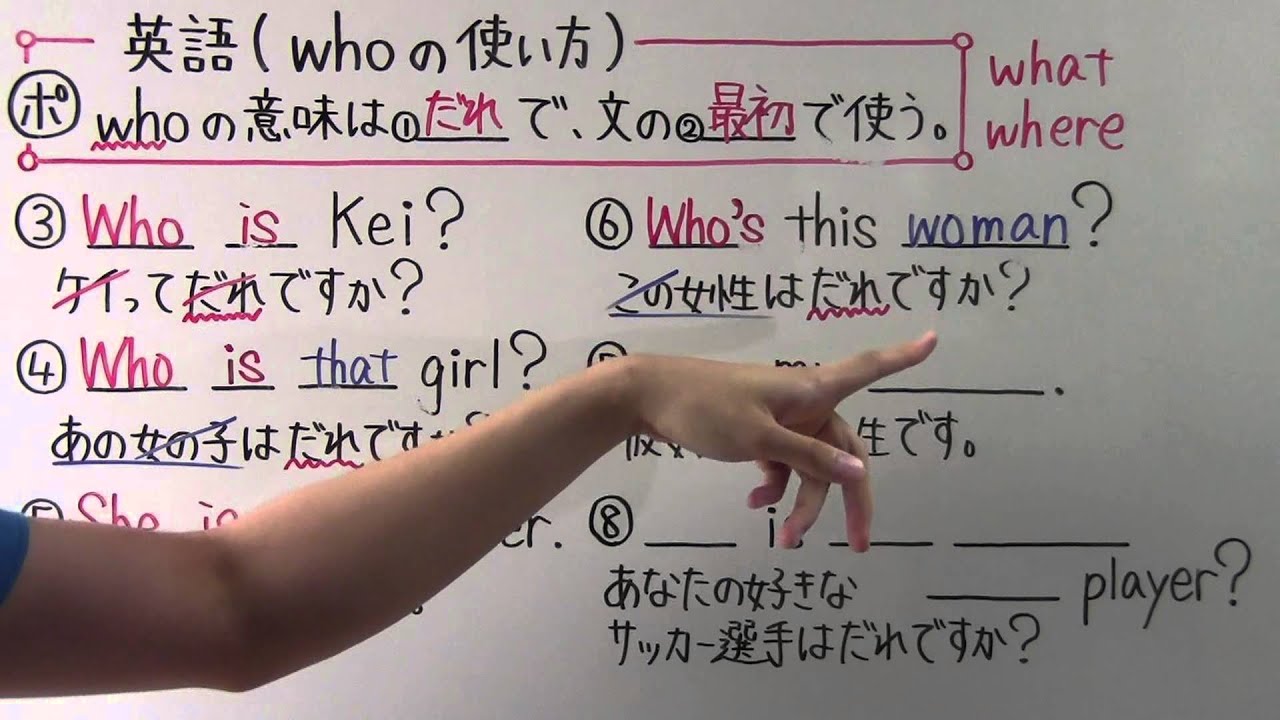


【英語】中1-24 三単現のs①(肯定文編) - 質問解決D.B.(データベース)

【英語】中1-24 三単現のs①(肯定文編)

問題文全文(内容文):
主語が①____ のとき、
②____ に③__か④__をつける!

⑤__ __soccer.
私はサッカーをする。

⑥__ __soccer.
彼はサッカーをする。

⑦Miyu__ __ the shop.
ミユはその店に行く。

⑧____ ____ ____ ____ TV.
私の母はいつもテレビを見る。

⑨____ ____ this book.
私たちはこの本を読む。

⑩Riku ____ English.
リクは英語の勉強をする。

⑪__ __ a piano,
彼女はピアノを持っている。

⑫Yui__ Maki __ the singer.
ユイとマキはその歌を知っている。

⑬Ren ____ ____ that game.
レンはあのゲームについて話します。
単元: #英語(中学生)#中1英語#He(She) is~. Who is~?の文(肯定文・否定文・疑問文)
指導講師: とある男が授業をしてみた
問題文全文(内容文):
主語が①____ のとき、
②____ に③__か④__をつける!

⑤__ __soccer.
私はサッカーをする。

⑥__ __soccer.
彼はサッカーをする。

⑦Miyu__ __ the shop.
ミユはその店に行く。

⑧____ ____ ____ ____ TV.
私の母はいつもテレビを見る。

⑨____ ____ this book.
私たちはこの本を読む。

⑩Riku ____ English.
リクは英語の勉強をする。

⑪__ __ a piano,
彼女はピアノを持っている。

⑫Yui__ Maki __ the singer.
ユイとマキはその歌を知っている。

⑬Ren ____ ____ that game.
レンはあのゲームについて話します。
投稿日:2013.08.14

<関連動画>

Lesson11-3 NT Stage1 3rd Edition【岡ちゃん先生がていねいに解説】

アイキャッチ画像
単元: #英語(中学生)#英語(高校生)#英文法#中1英語#中2英語#名詞・冠詞・代名詞#Where、Which、Howで始まる疑問文#可算名詞・不可算名詞、冠詞a,an,the#Whで始まる疑問文、Howで始まる疑問文、付加疑問文、否定疑問文
教材: #NT ENGLISH SERIES#Third Edition Stage1#Lesson11#中高教材
指導講師: 理数個別チャンネル
問題文全文(内容文):
N.T. SERIES Third Edition Stage1 Lesson11-3
この動画を見る 

【英語】「とても」の違い~very, so, too~

アイキャッチ画像
単元: #英語(中学生)#中1英語#アルファベットと単語
指導講師: 【楽しい授業動画】あきとんとん
問題文全文(内容文):
「とても(very, so, too)」の違いについての説明動画です
この動画を見る 

【中学英語】不可算名詞と可算名詞~many muchの違い~ 1-4【中1英語】

アイキャッチ画像
単元: #英語(中学生)#中1英語#名詞・代名詞の複数形、How many~?、someとany
指導講師: 【楽しい授業動画】あきとんとん
問題文全文(内容文):
不可算名詞と可算名詞(many muchの違い)の説明動画です
この動画を見る 

Lesson6-2 NT Stage1 3rd Edition【しまだじろうがていねいに解説】

アイキャッチ画像
単元: #英語(中学生)#英語(高校生)#英文法#品詞と文型、句と節#中1英語#canの文(肯定文・否定文・疑問文)
教材: #NT ENGLISH SERIES#Third Edition Stage1#Lesson6#中高教材
指導講師: 理数個別チャンネル
問題文全文(内容文):
Lesson6-2は助動詞canの使い方と、自動詞と他動詞についてです。助動詞って何?自動詞と他動詞って何?基礎からわかりやすく解説!また、テキストに出て来る単語のチェックや動詞の使い方なども、ていねいに解説しているので基礎から応用までしっかり理解しましょう!
この動画を見る 

【英語】Stage2 Lesson2 Read全訳

アイキャッチ画像
単元: #英語(中学生)#中1英語#This is~. That is~. What is~? の文(肯定文・否定文・疑問文)
指導講師: 理数個別チャンネル
問題文全文(内容文):
❶What Is a "Non-Native Species"?
Non-native species are animals and plants from a different part of the world. They often create problems for the native animals and plants, or even take the place of other species. We usually think that all non-native species are harmful. But is this true?
❷How Does a Non-Native Species Arrive?
They usually arrive in new lands because of human activities. When we travel around the world, we sometimes carry species with us by accident. At other times, humans bring non-native species on purpose. They travel on our trains or ships far from their original homes. Now let's look at some examples of these non-native species.

・European rabbits in Australia
In 1859, an English settler brought 13 wild European rabbits into Australia because he wanted to hunt them for sport. However, some of the rabbits survived. After ten years, there were too many rabbits. They ate crops and many native plants. Other animals died because the rabbits ate all their food. There are now more than 200 million rabbits in Australia.
・Brown tree snakes in Guam
People brought brown tree snakes into Guam on ships by accident after World War Ⅱ. In just seventy years, the snakes ate most of the birds on the island. Nine of the eleven native forest birds in Guam disappeared completely.

❸Are All Non-Native Species Bad?
Scientists and governments around the world think that we should reduce the numbers of non-native species. But some of these non-native species actually help the lives of other species. On an island near Mauritius, the native giant tortoise died out. After that, many native plants on the island could not survive because they couldn't spread their seeds by themselves. The giant tortoise ate the fruit of the plants and spread the seeds in its feces. So at the beginning of the twenty-first century, scientists brought a non-native tortoise, the Aldabra tortoise, to the island. Now these tortoises are eating the fruit of the plants and spreading the seeds. Other non-native species can play similar roles in their new homes.

❹What's Important for the Environment?
Non-native species are often dangerous to other species. But in some cases, they play an important role in the new environment. Either way, we have to think as carefully as we can before we bring a species to a new environment. The impact of non-native species will be one of the greatest environmental problem of the twenty-first century. If we don't make the right choices today, the earth's natural environment will be in danger in the future.
この動画を見る 
PAGE TOP