

 This is~. That is~. What is~? の文(肯定文・否定文・疑問文)
 This is~. That is~. What is~? の文(肯定文・否定文・疑問文)
第360回TOEIC公開テスト感想【7月28日午前】
単元:
#英語(中学生)#英語(高校生)#英文法#会話文・イディオム・構文・英単語#英文解釈#長文読解#英検・TOEIC・IELTS・TOEFL・IELTS等#TOEIC#イディオム#構文#品詞と文型、句と節#中1英語#中2英語#中3英語#文の種類#時制#助動詞#受動態#不定詞#動名詞#分詞・分詞構文#関係代名詞・関係副詞・複合関係詞#接続詞#比較#仮定法#話法の転換#否定表現・特別な表現#名詞・冠詞・代名詞#形容詞・副詞#前置詞#会話文#アルファベットと単語#I am~. You are~.の文(肯定文・否定文・疑問文)#This is~. That is~. What is~? の文(肯定文・否定文・疑問文)#He(She) is~. Who is~?の文(肯定文・否定文・疑問文)#一般動詞(1・2人称)(肯定文・否定文・疑問文)#名詞・代名詞の複数形、How many~?、someとany#形容詞・副詞#命令文、否定の命令文、ていねいな命令文、Let's~.の文、あいさつ#一般動詞(3人称・単数)(肯定文・否定文・疑問文)#代名詞の目的格、所有代名詞、Whose~?と答え方#時刻の表し方とたずね方、曜日・日付のたずね方、When~?、「時」を表す前置詞#Where、Which、Howで始まる疑問文#現在進行形(肯定文・否定文・疑問文)#canの文(肯定文・否定文・疑問文)#規則動詞の過去形(肯定文・否定文・疑問文)#不規則動詞の過去形(肯定文・否定文・疑問文)#be動詞の過去形(肯定文・否定文・疑問文)#過去進行形(肯定文・否定文・疑問文)#未来の文(肯定文・否定文・疑問文)#can、could、be able to、may、must、have to、should、助動詞を使った表現#命令文、Let's~、Don't~、命令文, and(or)~の文#There is~の文(肯定文・否定文・疑問文)#可算名詞・不可算名詞、冠詞a,an,the#人称代名詞、所有代名詞、再帰代名詞、itの特別用法、指示代名詞、不定代名詞#Whで始まる疑問文、Howで始まる疑問文、付加疑問文、否定疑問文#不定詞(名詞的用法・形容詞的用法・副詞的用法)#動名詞(動詞の目的語、主語・補語・前置詞の目的語、動名詞と不定詞)#接続詞(and,or,but,so・when,if,because,before,after・接続詞that)#文型(第1文型、第2文型、第3文型、第4文型、第5文型)#比較(比較級、最上級、more,mostを使った比較、as~asの文、不規則変化するもの、疑問詞で始まる比較の文)#未来の文・助動詞(will,be going to,can,could,may,might,must,have to,should,shall,would,had better,used to,ought to)#受動態#現在完了(継続、経験、完了・結果)#不定詞(疑問詞+to,It~for to,ask(tell,want)O to,too~to,enough~to,not to)#分詞(現在分詞の形容詞的用法、過去分詞の形容詞的用法)#関係代名詞(主格、目的格、所有格、thatの用法、前置詞+関係代名詞)#英単語#英語リスニング・スピーキング#リスニング#間接疑問文
指導講師:
Morite2 English Channel
問題文全文(内容文):
360回TOEIC公開テスト感想
Part1 普通orやや難
Part2 やや難
Part3,4 普通
Part5 やや難
Part6 普通
Part7 超難
この動画を見る
360回TOEIC公開テスト感想
Part1 普通orやや難
Part2 やや難
Part3,4 普通
Part5 やや難
Part6 普通
Part7 超難
Lesson2-3NT Stage1 3rd Edition 【ダスカロイがていねいに解説】
単元:
#英語(中学生)#中1英語#This is~. That is~. What is~? の文(肯定文・否定文・疑問文)#He(She) is~. Who is~?の文(肯定文・否定文・疑問文)
教材:
#NT ENGLISH SERIES#Third Edition Stage1#Lesson2#中高教材
指導講師:
理数個別チャンネル
問題文全文(内容文):
N.T. ENGLISH SERIES Third Edition Stage1 Lesson2-3のKeyPoint例文解説です。
この動画を見る
N.T. ENGLISH SERIES Third Edition Stage1 Lesson2-3のKeyPoint例文解説です。
Lesson4-3 ニュートレジャー Stage1 3rd Edition【岡ちゃん先生がていねいに解説】
単元:
#英語(中学生)#中1英語#I am~. You are~.の文(肯定文・否定文・疑問文)#This is~. That is~. What is~? の文(肯定文・否定文・疑問文)#He(She) is~. Who is~?の文(肯定文・否定文・疑問文)#一般動詞(1・2人称)(肯定文・否定文・疑問文)#一般動詞(3人称・単数)(肯定文・否定文・疑問文)#Where、Which、Howで始まる疑問文#現在進行形(肯定文・否定文・疑問文)#canの文(肯定文・否定文・疑問文)
指導講師:
理数個別チャンネル
問題文全文(内容文):
疑問詞疑問文when/where/what timeについての解説です
この動画を見る
疑問詞疑問文when/where/what timeについての解説です
Lesson5-3 ニュートレジャー Stage1 3rd Edition【YAKISOBA先生がていねいに解説】
単元:
#英語(中学生)#中1英語#This is~. That is~. What is~? の文(肯定文・否定文・疑問文)#He(She) is~. Who is~?の文(肯定文・否定文・疑問文)#代名詞の目的格、所有代名詞、Whose~?と答え方#Where、Which、Howで始まる疑問文
指導講師:
理数個別チャンネル
問題文全文(内容文):
ニュートレジャー Stage1 3rd EditionのLesson5-3の解説です。
この動画を見る
ニュートレジャー Stage1 3rd EditionのLesson5-3の解説です。
Lesson1-2 NT Stage1 3rd Edition【岡ちゃん先生がていねいに解説】
単元:
#英語(中学生)#中1英語#This is~. That is~. What is~? の文(肯定文・否定文・疑問文)
教材:
#NT ENGLISH SERIES#Third Edition Stage1#Lesson1#中高教材
指導講師:
理数個別チャンネル
問題文全文(内容文):
this that の文、使い方
この動画を見る
this that の文、使い方
Lesson1-2 ニュートレジャー Stage1 3rd Edition【岡ちゃん先生がていねいに解説】
単元:
#英語(中学生)#中1英語#中2英語#This is~. That is~. What is~? の文(肯定文・否定文・疑問文)#be動詞の過去形(肯定文・否定文・疑問文)
指導講師:
理数個別チャンネル
問題文全文(内容文):
this that の文、使い方に関して解説していきます.
この動画を見る
this that の文、使い方に関して解説していきます.
Lesson2-2 ニュートレジャー Stage1 3rd Edition 【ダスカロイがていねいに解説】
単元:
#英語(中学生)#中1英語#This is~. That is~. What is~? の文(肯定文・否定文・疑問文)
指導講師:
理数個別チャンネル
問題文全文(内容文):
ニュートレジャー Stage1 3rd Edition Lesson2-2のKeyPoint例文解説です。
この動画を見る
ニュートレジャー Stage1 3rd Edition Lesson2-2のKeyPoint例文解説です。
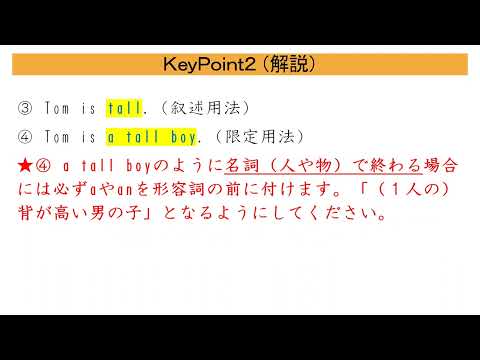
Lesson2-2 NT Stage1 3rd Edition 【ダスカロイがていねいに解説】
単元:
#英語(中学生)#中1英語#This is~. That is~. What is~? の文(肯定文・否定文・疑問文)
教材:
#NT ENGLISH SERIES#Third Edition Stage1#Lesson2#中高教材
指導講師:
理数個別チャンネル
問題文全文(内容文):
N.T. ENGLISH SERIES Third Edition Stage1 Lesson2-2のKeyPoint例文解説です。
疑問詞whatの使い方
この動画を見る
N.T. ENGLISH SERIES Third Edition Stage1 Lesson2-2のKeyPoint例文解説です。
疑問詞whatの使い方
【英語】Lesson3-2 Stage1 【シュン・ヒノハラがていねいに解説】
単元:
#英語(中学生)#中1英語#I am~. You are~.の文(肯定文・否定文・疑問文)#This is~. That is~. What is~? の文(肯定文・否定文・疑問文)#名詞・代名詞の複数形、How many~?、someとany
指導講師:
理数個別チャンネル
問題文全文(内容文):
疑問詞疑問文、someとany、複数形、冠詞などについての解説をしています。
この動画を見る
疑問詞疑問文、someとany、複数形、冠詞などについての解説をしています。
【英語】Stage2 Lesson2 Read全訳
単元:
#英語(中学生)#中1英語#This is~. That is~. What is~? の文(肯定文・否定文・疑問文)
指導講師:
理数個別チャンネル
問題文全文(内容文):
❶What Is a "Non-Native Species"?
Non-native species are animals and plants from a different part of the world. They often create problems for the native animals and plants, or even take the place of other species. We usually think that all non-native species are harmful. But is this true?
❷How Does a Non-Native Species Arrive?
They usually arrive in new lands because of human activities. When we travel around the world, we sometimes carry species with us by accident. At other times, humans bring non-native species on purpose. They travel on our trains or ships far from their original homes. Now let's look at some examples of these non-native species.
・European rabbits in Australia
In 1859, an English settler brought 13 wild European rabbits into Australia because he wanted to hunt them for sport. However, some of the rabbits survived. After ten years, there were too many rabbits. They ate crops and many native plants. Other animals died because the rabbits ate all their food. There are now more than 200 million rabbits in Australia.
・Brown tree snakes in Guam
People brought brown tree snakes into Guam on ships by accident after World War Ⅱ. In just seventy years, the snakes ate most of the birds on the island. Nine of the eleven native forest birds in Guam disappeared completely.
❸Are All Non-Native Species Bad?
Scientists and governments around the world think that we should reduce the numbers of non-native species. But some of these non-native species actually help the lives of other species. On an island near Mauritius, the native giant tortoise died out. After that, many native plants on the island could not survive because they couldn't spread their seeds by themselves. The giant tortoise ate the fruit of the plants and spread the seeds in its feces. So at the beginning of the twenty-first century, scientists brought a non-native tortoise, the Aldabra tortoise, to the island. Now these tortoises are eating the fruit of the plants and spreading the seeds. Other non-native species can play similar roles in their new homes.
❹What's Important for the Environment?
Non-native species are often dangerous to other species. But in some cases, they play an important role in the new environment. Either way, we have to think as carefully as we can before we bring a species to a new environment. The impact of non-native species will be one of the greatest environmental problem of the twenty-first century. If we don't make the right choices today, the earth's natural environment will be in danger in the future.
この動画を見る
❶What Is a "Non-Native Species"?
Non-native species are animals and plants from a different part of the world. They often create problems for the native animals and plants, or even take the place of other species. We usually think that all non-native species are harmful. But is this true?
❷How Does a Non-Native Species Arrive?
They usually arrive in new lands because of human activities. When we travel around the world, we sometimes carry species with us by accident. At other times, humans bring non-native species on purpose. They travel on our trains or ships far from their original homes. Now let's look at some examples of these non-native species.
・European rabbits in Australia
In 1859, an English settler brought 13 wild European rabbits into Australia because he wanted to hunt them for sport. However, some of the rabbits survived. After ten years, there were too many rabbits. They ate crops and many native plants. Other animals died because the rabbits ate all their food. There are now more than 200 million rabbits in Australia.
・Brown tree snakes in Guam
People brought brown tree snakes into Guam on ships by accident after World War Ⅱ. In just seventy years, the snakes ate most of the birds on the island. Nine of the eleven native forest birds in Guam disappeared completely.
❸Are All Non-Native Species Bad?
Scientists and governments around the world think that we should reduce the numbers of non-native species. But some of these non-native species actually help the lives of other species. On an island near Mauritius, the native giant tortoise died out. After that, many native plants on the island could not survive because they couldn't spread their seeds by themselves. The giant tortoise ate the fruit of the plants and spread the seeds in its feces. So at the beginning of the twenty-first century, scientists brought a non-native tortoise, the Aldabra tortoise, to the island. Now these tortoises are eating the fruit of the plants and spreading the seeds. Other non-native species can play similar roles in their new homes.
❹What's Important for the Environment?
Non-native species are often dangerous to other species. But in some cases, they play an important role in the new environment. Either way, we have to think as carefully as we can before we bring a species to a new environment. The impact of non-native species will be one of the greatest environmental problem of the twenty-first century. If we don't make the right choices today, the earth's natural environment will be in danger in the future.
【英語】中1英文法:be動詞と一般動詞の区別練習
単元:
#英語(中学生)#中1英語#I am~. You are~.の文(肯定文・否定文・疑問文)#This is~. That is~. What is~? の文(肯定文・否定文・疑問文)#He(She) is~. Who is~?の文(肯定文・否定文・疑問文)#一般動詞(1・2人称)(肯定文・否定文・疑問文)
指導講師:
理数個別チャンネル
問題文全文(内容文):
次の日本語を英語に直しなさい。
(1)あなたは寿司が好きですか?
(2)彼は図書館にいますか?
(3)あなたは忙しいですか?
(4)あなたは野球をしますか?
(5)あなたには何人か兄弟がいますか?
この動画を見る
次の日本語を英語に直しなさい。
(1)あなたは寿司が好きですか?
(2)彼は図書館にいますか?
(3)あなたは忙しいですか?
(4)あなたは野球をしますか?
(5)あなたには何人か兄弟がいますか?
【英語】代名詞:this thatの違い
単元:
#英語(中学生)#英語(高校生)#英文法#中1英語#名詞・冠詞・代名詞#This is~. That is~. What is~? の文(肯定文・否定文・疑問文)
指導講師:
理数個別チャンネル
問題文全文(内容文):
代名詞:this thatの違いに関して解説していきます.
この動画を見る
代名詞:this thatの違いに関して解説していきます.
be動詞の使い分け
単元:
#英語(中学生)#中1英語#I am~. You are~.の文(肯定文・否定文・疑問文)#This is~. That is~. What is~? の文(肯定文・否定文・疑問文)
指導講師:
【楽しい授業動画】あきとんとん
問題文全文(内容文):
be動詞の使い分け
この動画を見る
be動詞の使い分け
【中学英語】否定文の作り方~苦手な人でもできるようになる~ 1-6【中1英語】
単元:
#英語(中学生)#中1英語#I am~. You are~.の文(肯定文・否定文・疑問文)#This is~. That is~. What is~? の文(肯定文・否定文・疑問文)
指導講師:
【楽しい授業動画】あきとんとん
問題文全文(内容文):
【中1英語】否定文の作り方の説明動画です
この動画を見る
【中1英語】否定文の作り方の説明動画です
【中学英語】thisとthatの使い方~複数形の覚え方も~ 1-2【中1英語】
単元:
#英語(中学生)#中1英語#This is~. That is~. What is~? の文(肯定文・否定文・疑問文)
指導講師:
【楽しい授業動画】あきとんとん
問題文全文(内容文):
【中1英語】thisとthatの使い方説明動画です
この動画を見る
【中1英語】thisとthatの使い方説明動画です
【中学英語】be動詞と一般動詞~英語苦手な人は見て~ 1-1【中1英語】
単元:
#英語(中学生)#中1英語#I am~. You are~.の文(肯定文・否定文・疑問文)#This is~. That is~. What is~? の文(肯定文・否定文・疑問文)#He(She) is~. Who is~?の文(肯定文・否定文・疑問文)#一般動詞(1・2人称)(肯定文・否定文・疑問文)
指導講師:
【楽しい授業動画】あきとんとん
問題文全文(内容文):
【中1英語】be動詞と一般動詞についての説明動画です
この動画を見る
【中1英語】be動詞と一般動詞についての説明動画です
【中学英語】疑問詞:WhatとHowの違いを説明できますか?
単元:
#英語(中学生)#英語(高校生)#英文法#中1英語#中2英語#文の種類#This is~. That is~. What is~? の文(肯定文・否定文・疑問文)#名詞・代名詞の複数形、How many~?、someとany#Where、Which、Howで始まる疑問文#Whで始まる疑問文、Howで始まる疑問文、付加疑問文、否定疑問文
指導講師:
理数個別チャンネル
問題文全文(内容文):
Whatは「なんの?」、Howは「どんな?」と覚えていると間違えますよ。
この動画を見る
Whatは「なんの?」、Howは「どんな?」と覚えていると間違えますよ。
【英語】中1-19 頻度を表す単語
単元:
#英語(中学生)#中1英語#I am~. You are~.の文(肯定文・否定文・疑問文)#This is~. That is~. What is~? の文(肯定文・否定文・疑問文)#He(She) is~. Who is~?の文(肯定文・否定文・疑問文)#一般動詞(1・2人称)(肯定文・否定文・疑問文)#一般動詞(3人称・単数)(肯定文・否定文・疑問文)
指導講師:
とある男が授業をしてみた
問題文全文(内容文):
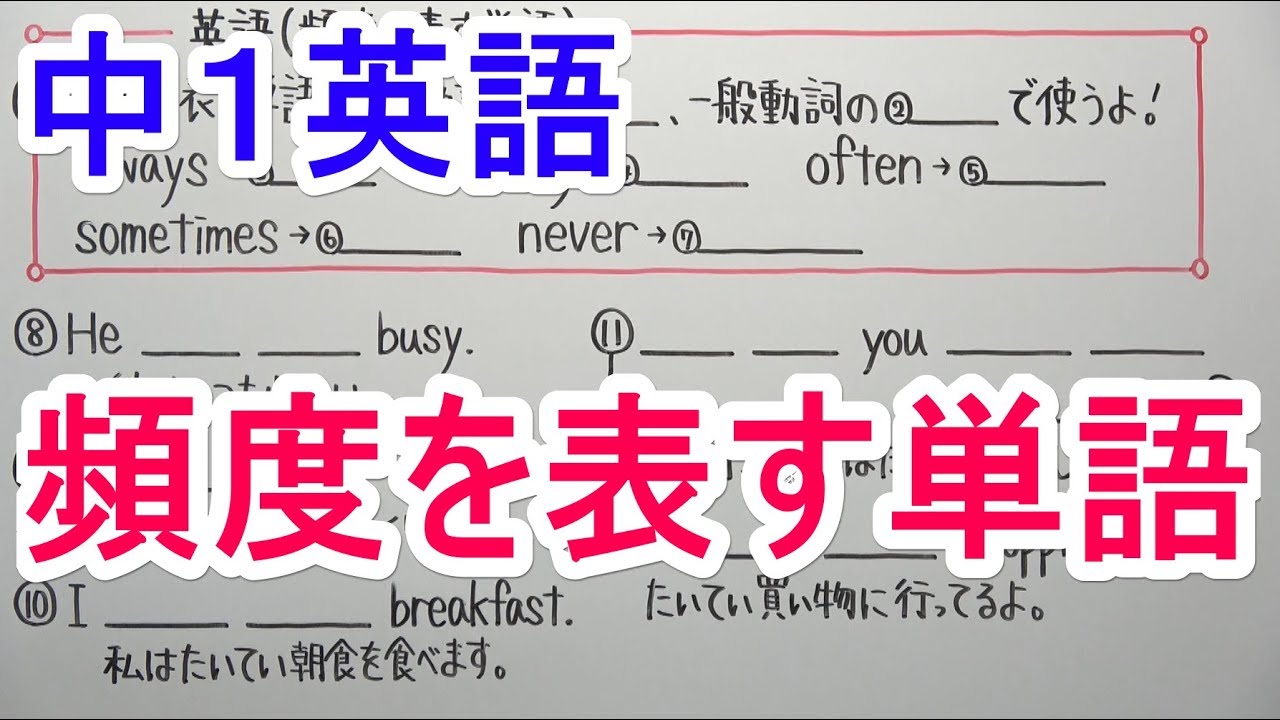
頻度を表す単語を解説していきます。
この動画を見る
頻度を表す単語を解説していきます。
【英語】中1-18 whatの使い方②(一般動詞とコラボ編)
単元:
#英語(中学生)#中1英語#This is~. That is~. What is~? の文(肯定文・否定文・疑問文)
指導講師:
とある男が授業をしてみた
問題文全文(内容文):
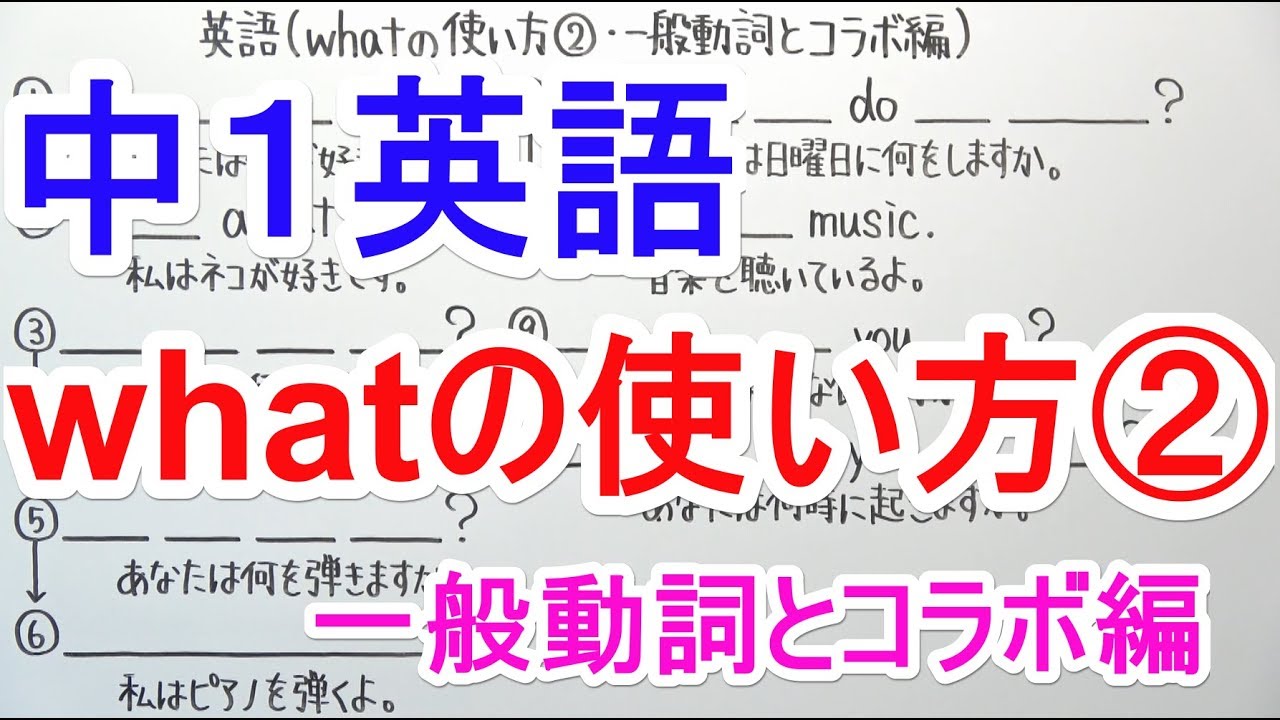
whatの使い方②解説していきます。
この動画を見る
whatの使い方②解説していきます。
【英語】中1-16 確認テスト③(2つの動詞編)
単元:
#英語(中学生)#中1英語#I am~. You are~.の文(肯定文・否定文・疑問文)#This is~. That is~. What is~? の文(肯定文・否定文・疑問文)#一般動詞(1・2人称)(肯定文・否定文・疑問文)
指導講師:
とある男が授業をしてみた
問題文全文(内容文):
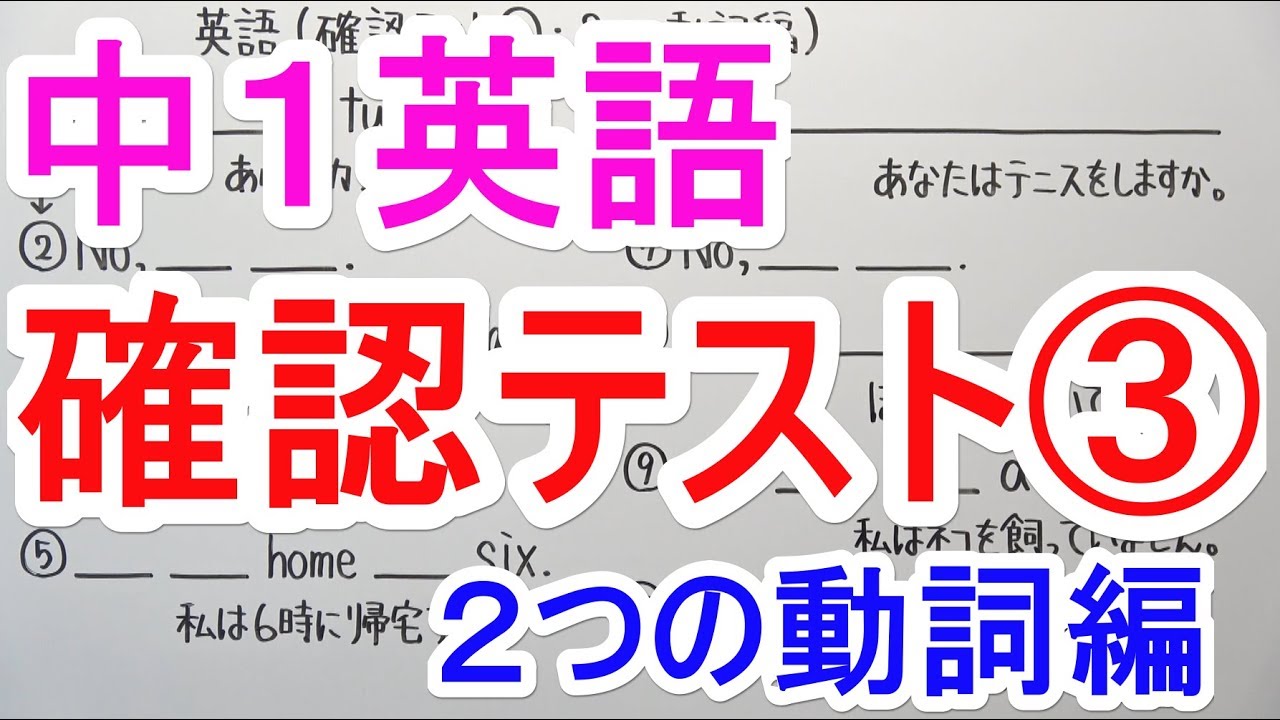
一般動詞とbe動詞を解説していきます。
この動画を見る
一般動詞とbe動詞を解説していきます。
【英語】中1-11 確認テスト②(be動詞編)
単元:
#英語(中学生)#中1英語#I am~. You are~.の文(肯定文・否定文・疑問文)#This is~. That is~. What is~? の文(肯定文・否定文・疑問文)#He(She) is~. Who is~?の文(肯定文・否定文・疑問文)
指導講師:
とある男が授業をしてみた
問題文全文(内容文):
be動詞編の解説をしていきます。
この動画を見る
be動詞編の解説をしていきます。
【英語】中1-6 whatの使い方①
単元:
#英語(中学生)#中1英語#This is~. That is~. What is~? の文(肯定文・否定文・疑問文)
指導講師:
とある男が授業をしてみた
問題文全文(内容文):
whatの使い方①を解説していきます。
この動画を見る
whatの使い方①を解説していきます。
【英語】中1-5 確認テスト①(be動詞編)
単元:
#英語(中学生)#中1英語#I am~. You are~.の文(肯定文・否定文・疑問文)#This is~. That is~. What is~? の文(肯定文・否定文・疑問文)#He(She) is~. Who is~?の文(肯定文・否定文・疑問文)
指導講師:
とある男が授業をしてみた
問題文全文(内容文):
be動詞に関して解説していきます。
この動画を見る
be動詞に関して解説していきます。
【英語】中1-4 That isの使い方
単元:
#英語(中学生)#中1英語#This is~. That is~. What is~? の文(肯定文・否定文・疑問文)
指導講師:
とある男が授業をしてみた
問題文全文(内容文):
That is~の使い方に関して解説します。
この動画を見る
That is~の使い方に関して解説します。
【英語】中1-3 This isの使い方
単元:
#英語(中学生)#中1英語#This is~. That is~. What is~? の文(肯定文・否定文・疑問文)
指導講師:
とある男が授業をしてみた
問題文全文(内容文):
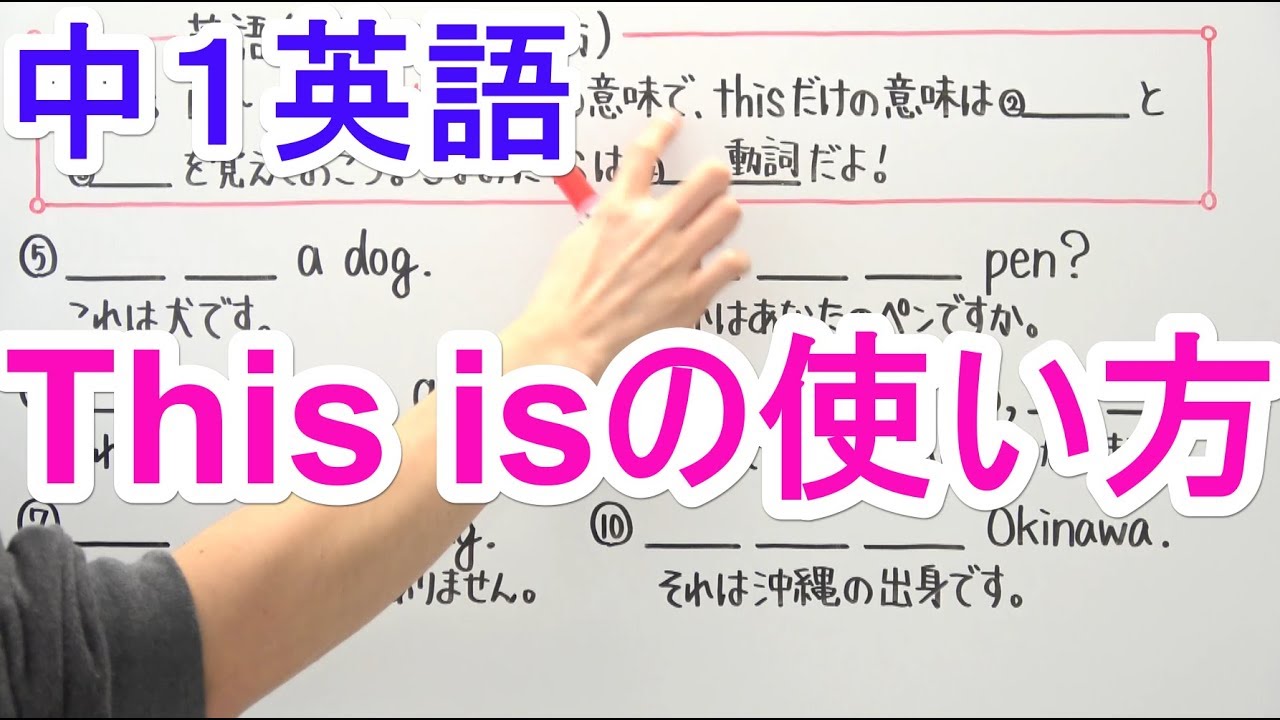
This is~の使い方を解説していきます。
この動画を見る
This is~の使い方を解説していきます。
【英語】中1-35 下線部をたずねる疑問文
単元:
#英語(中学生)#中1英語#This is~. That is~. What is~? の文(肯定文・否定文・疑問文)#He(She) is~. Who is~?の文(肯定文・否定文・疑問文)#代名詞の目的格、所有代名詞、Whose~?と答え方#時刻の表し方とたずね方、曜日・日付のたずね方、When~?、「時」を表す前置詞#Where、Which、Howで始まる疑問文
指導講師:
とある男が授業をしてみた
問題文全文(内容文):
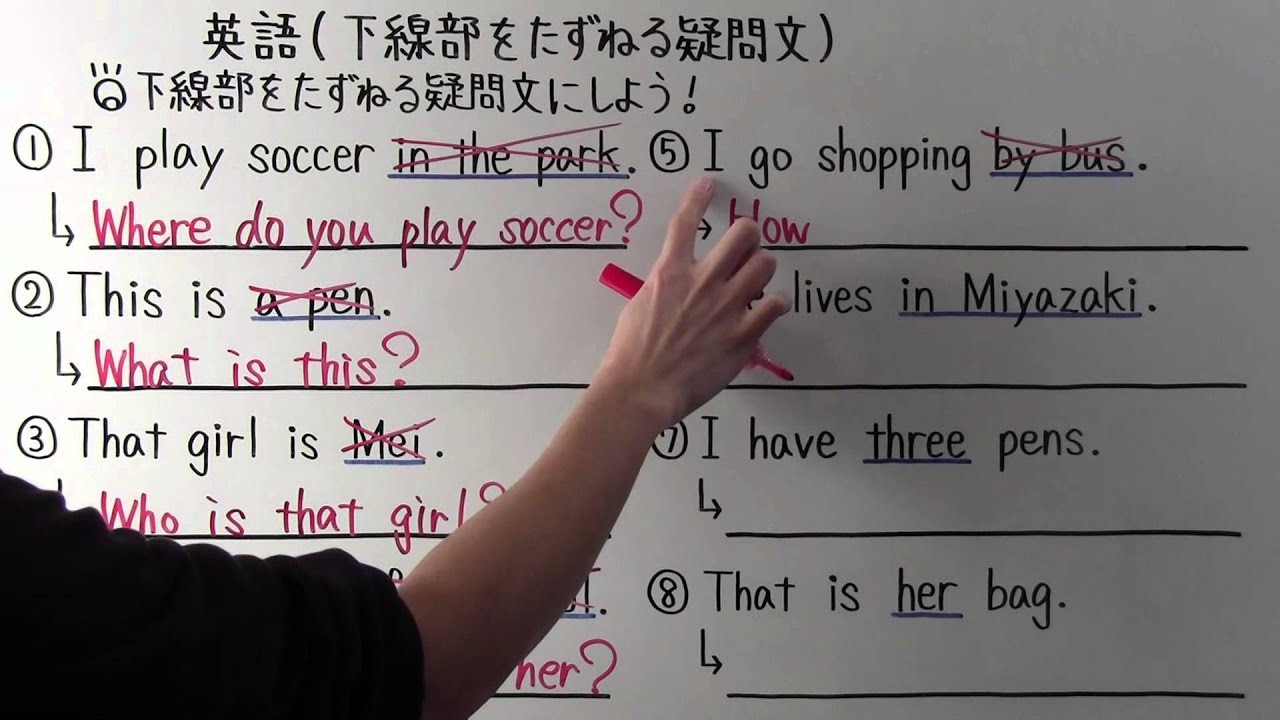
◎下線部をたずねる疑問文にしよう!
①I play soccer in the park.
※下線部は動画内参照
→_____________________.
②This is a pen.
→_____________________.
③That girl is Mei.
→_____________________.
④He meets her after school.
→_____________________.
⑤I go shopping by bus.
→_____________________.
⑦I have three pens.
→_____________________.
⑧That is her bag.
→_____________________.
この動画を見る
◎下線部をたずねる疑問文にしよう!
①I play soccer in the park.
※下線部は動画内参照
→_____________________.
②This is a pen.
→_____________________.
③That girl is Mei.
→_____________________.
④He meets her after school.
→_____________________.
⑤I go shopping by bus.
→_____________________.
⑦I have three pens.
→_____________________.
⑧That is her bag.
→_____________________.
【英語】中1-10 これ,あれ,それ
単元:
#英語(中学生)#中1英語#This is~. That is~. What is~? の文(肯定文・否定文・疑問文)
指導講師:
とある男が授業をしてみた
問題文全文(内容文):
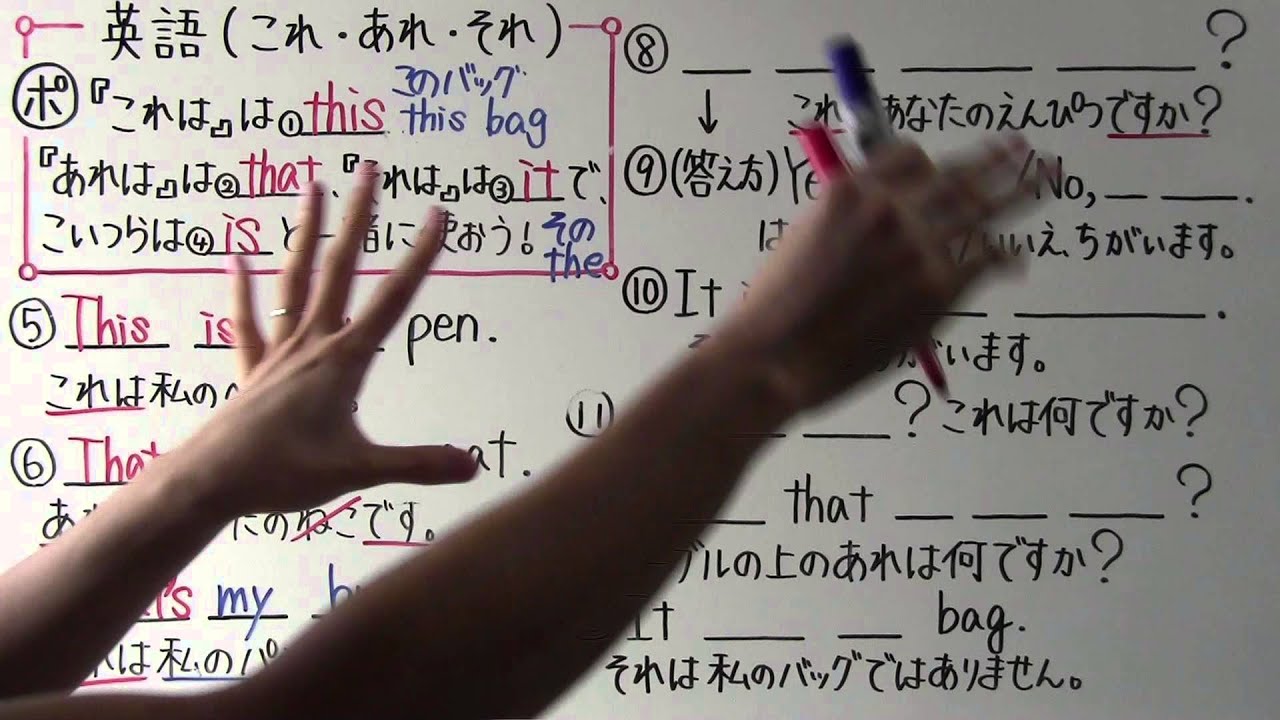
[これは]は①____、[あれは]は②____、
[それは]は③____で、こいつらは④____と一緒に使おう!
⑤____ ____ ____pen.
これは私のペンです。
⑥____ ____ ____ cat.
あれはあなたの猫です。
⑦____ ____ ____ ____.
あれは私のパンです。
⑧____ ____ ____ ____ ?
これはあなたのえんぴつですか?
→⑨(答え方)Yes,__ __./No, __ __.
はい、そうです。/いいえ、ちがいます。
⑩It is _ ____ ____.
それは少し違います。
⑪____ ____ ____?
これは何ですか?
⑫____ ____ that ____ ____ ____?
テーブルの上のあれは何ですか?
⑬It ____ ____ bag.
それは私のバッグではありません。
この動画を見る
[これは]は①____、[あれは]は②____、
[それは]は③____で、こいつらは④____と一緒に使おう!
⑤____ ____ ____pen.
これは私のペンです。
⑥____ ____ ____ cat.
あれはあなたの猫です。
⑦____ ____ ____ ____.
あれは私のパンです。
⑧____ ____ ____ ____ ?
これはあなたのえんぴつですか?
→⑨(答え方)Yes,__ __./No, __ __.
はい、そうです。/いいえ、ちがいます。
⑩It is _ ____ ____.
それは少し違います。
⑪____ ____ ____?
これは何ですか?
⑫____ ____ that ____ ____ ____?
テーブルの上のあれは何ですか?
⑬It ____ ____ bag.
それは私のバッグではありません。
【英語】中1-6 what の使い方
単元:
#英語(中学生)#中1英語#This is~. That is~. What is~? の文(肯定文・否定文・疑問文)
指導講師:
とある男が授業をしてみた
問題文全文(内容文):
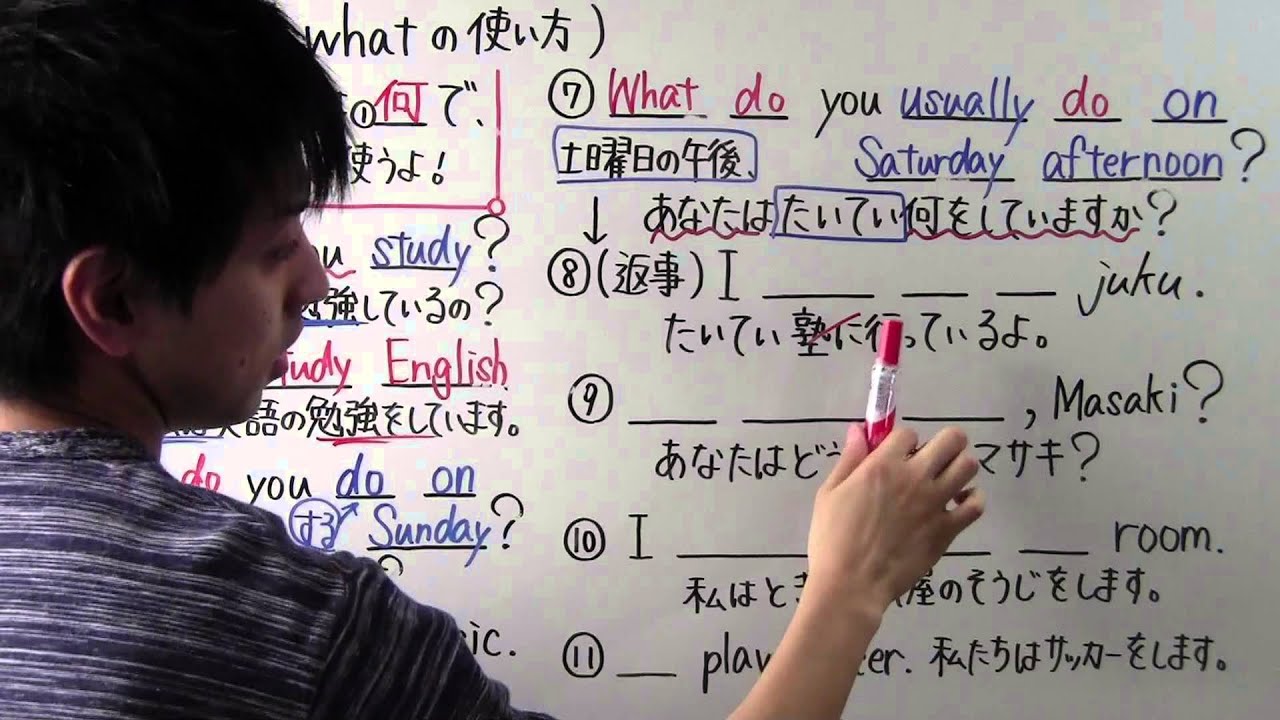
whatの意味は①で
文の②で使うよ!
③____ ____you____ ?
あなたは何を勉強しているの?
④→(返事)____ ____ ____
私は英語を勉強しています。
⑤____ ____you ____ ____ ____?
あなたは日曜日何をしているの?
⑥→(返事)I ____ music
私は音楽を聴いているよ。
⑦____ ____you____ ____ ____ ____ ____?
土曜日の午後、あなたは何をしていますか?
⑧→(返事)I ____ ____ ____ juku.
たいてい塾に行っているよ。
⑨____ ____ ____,Masaki?
あなたはどうですか?マサキ?
⑩I ____ ____ ____room.
私はときどき部屋をそうじします。
⑪____ play soccer
私たちはサッカーをします。
この動画を見る
whatの意味は①で
文の②で使うよ!
③____ ____you____ ?
あなたは何を勉強しているの?
④→(返事)____ ____ ____
私は英語を勉強しています。
⑤____ ____you ____ ____ ____?
あなたは日曜日何をしているの?
⑥→(返事)I ____ music
私は音楽を聴いているよ。
⑦____ ____you____ ____ ____ ____ ____?
土曜日の午後、あなたは何をしていますか?
⑧→(返事)I ____ ____ ____ juku.
たいてい塾に行っているよ。
⑨____ ____ ____,Masaki?
あなたはどうですか?マサキ?
⑩I ____ ____ ____room.
私はときどき部屋をそうじします。
⑪____ play soccer
私たちはサッカーをします。
【中1 英語】 1-4(旧) whatの使い方
単元:
#英語(中学生)#中1英語#This is~. That is~. What is~? の文(肯定文・否定文・疑問文)
指導講師:
とある男が授業をしてみた
問題文全文(内容文):
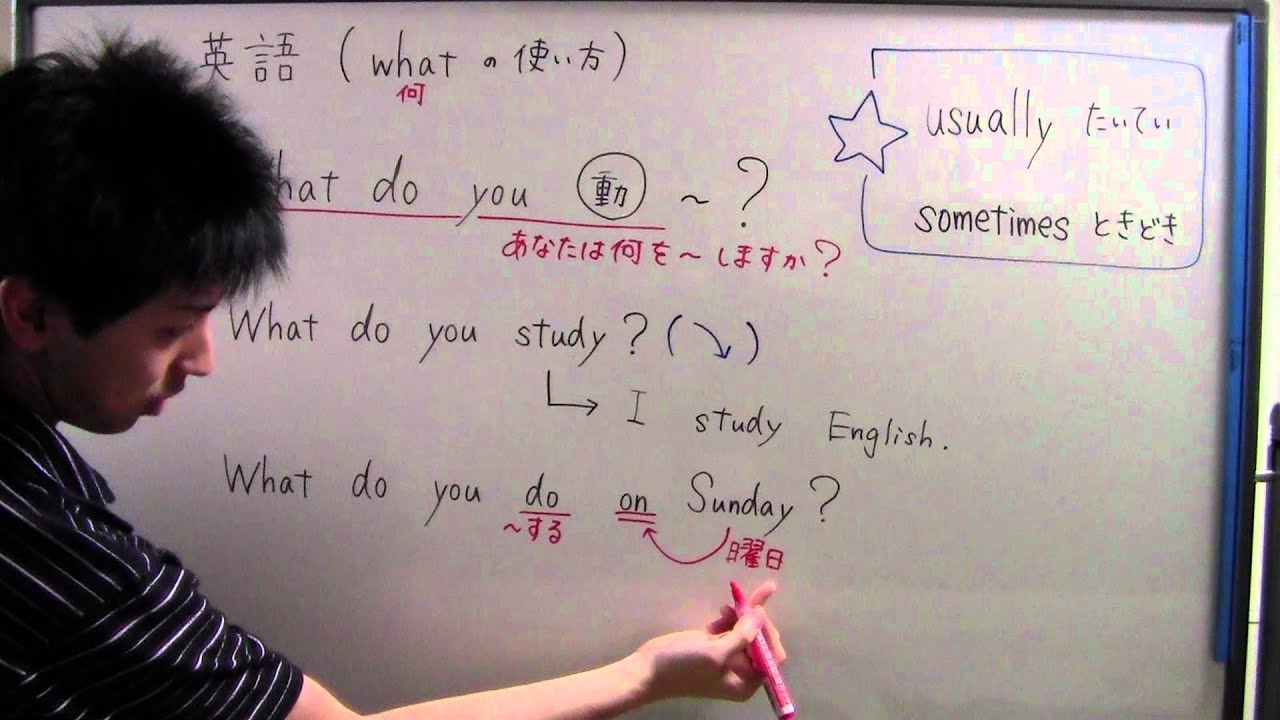
中1 英語 whatの使い方の解説
What do you (動詞) ~ ?
例1)What do you study ?
例2)What do you do on Sunday ?
この動画を見る
中1 英語 whatの使い方の解説
What do you (動詞) ~ ?
例1)What do you study ?
例2)What do you do on Sunday ?
【中1 英語】 1-⑩ これ!あれ!!それ!!! 【6~7月】
単元:
#英語(中学生)#中1英語#This is~. That is~. What is~? の文(肯定文・否定文・疑問文)
指導講師:
とある男が授業をしてみた
問題文全文(内容文):
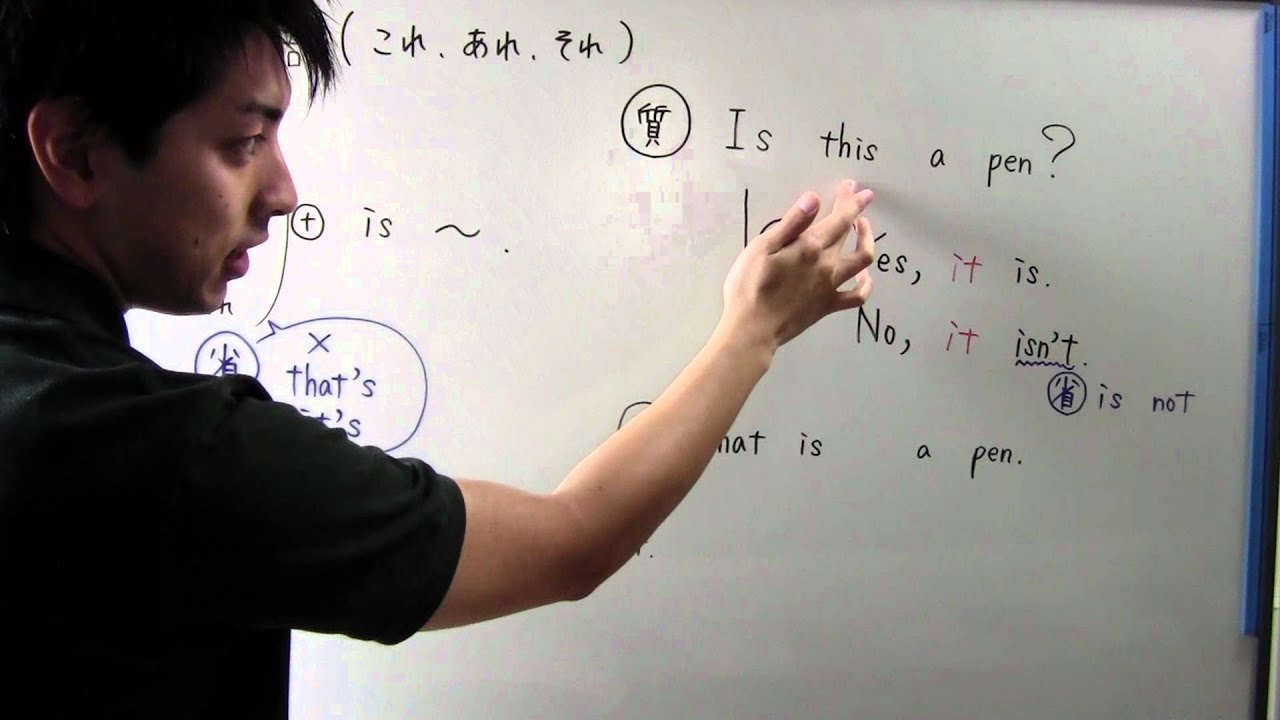
中1 英語 これ!あれ!!それ!!!
this + is ~
that + is ~
it + is ~
例文解説
質問文)Is this a pen ?
答)Yes, ( ) is.
No, ( ) isn't.
否定文)That is ( ) a pen.
この動画を見る
中1 英語 これ!あれ!!それ!!!
this + is ~
that + is ~
it + is ~
例文解説
質問文)Is this a pen ?
答)Yes, ( ) is.
No, ( ) isn't.
否定文)That is ( ) a pen.